 ALIF THREAD
If you've never worked with a manufacturer before, the process can feel opaque: you send a design somewhere and, weeks later, boxes of clothing show up. Here's what actually happens between those two points.
Step 1: Design and tech pack submission
Everything starts with a design brief. This can be as simple as a reference image and a written description, or as detailed as a full tech pack with measurements, construction notes and colorways. The more detail you provide upfront, the fewer revision rounds you'll need later: see our tech pack guide below for what to include.
Step 2: Fabric and trim sourcing
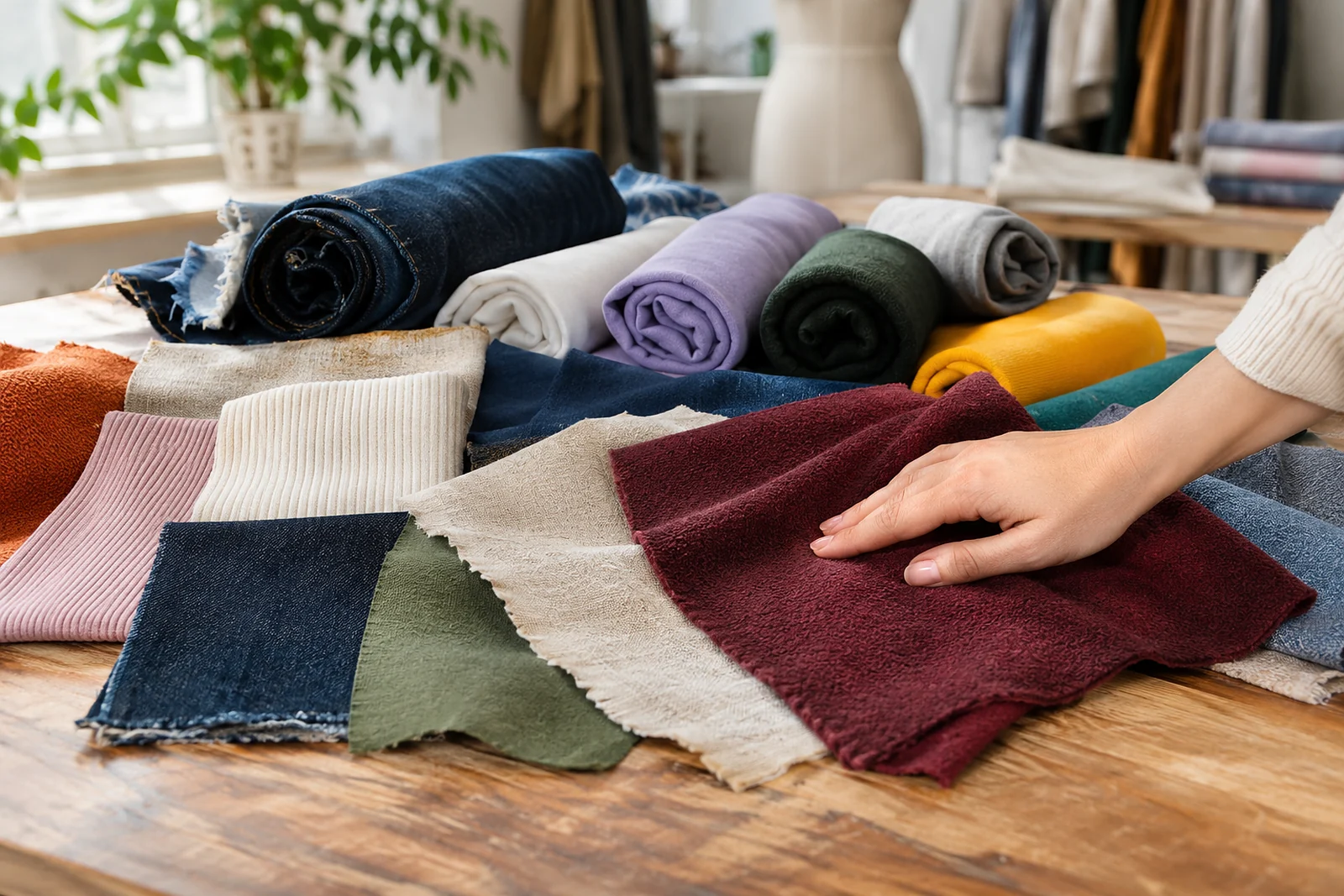
Once the design is confirmed, the manufacturer sources the specific fabric, thread, labels, and any trims (zippers, buttons, drawcords) needed. This is also when GSM, composition and color are finalized against real fabric stock rather than a digital swatch.
Step 3: Pattern making and first sample
A pattern maker builds the garment's pattern pieces based on your specs, and a sample is cut and sewn. This first sample (sometimes called a "proto sample") is for you to check fit, construction and overall look. It's normal to need one or two rounds of revision here.
Step 4: Sample approval
Once you approve a sample, it becomes the reference standard for bulk production. Everything in the bulk order is measured against this approved sample, which is why it's worth being thorough during this stage rather than rushing to bulk production.
Step 5: Bulk production
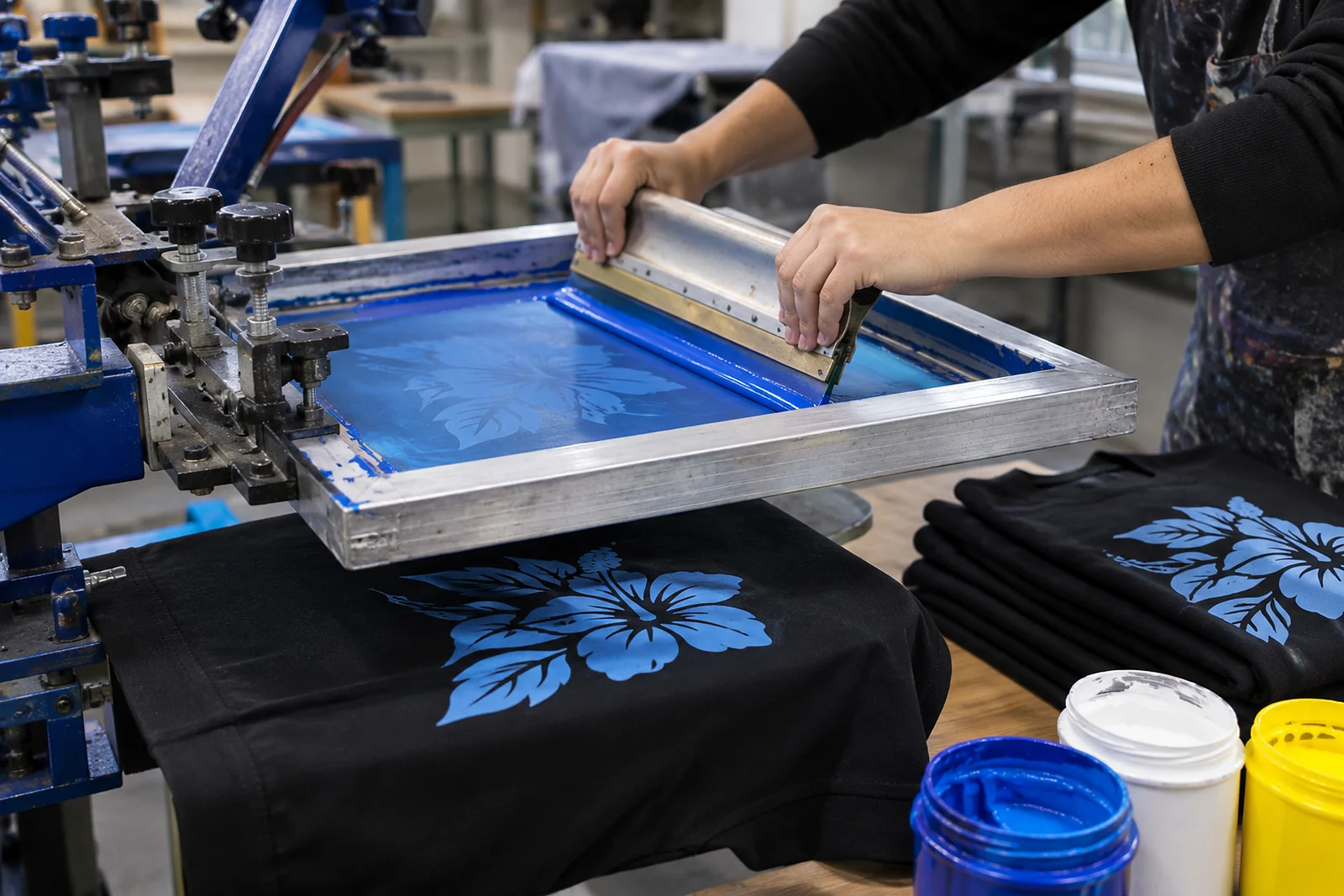
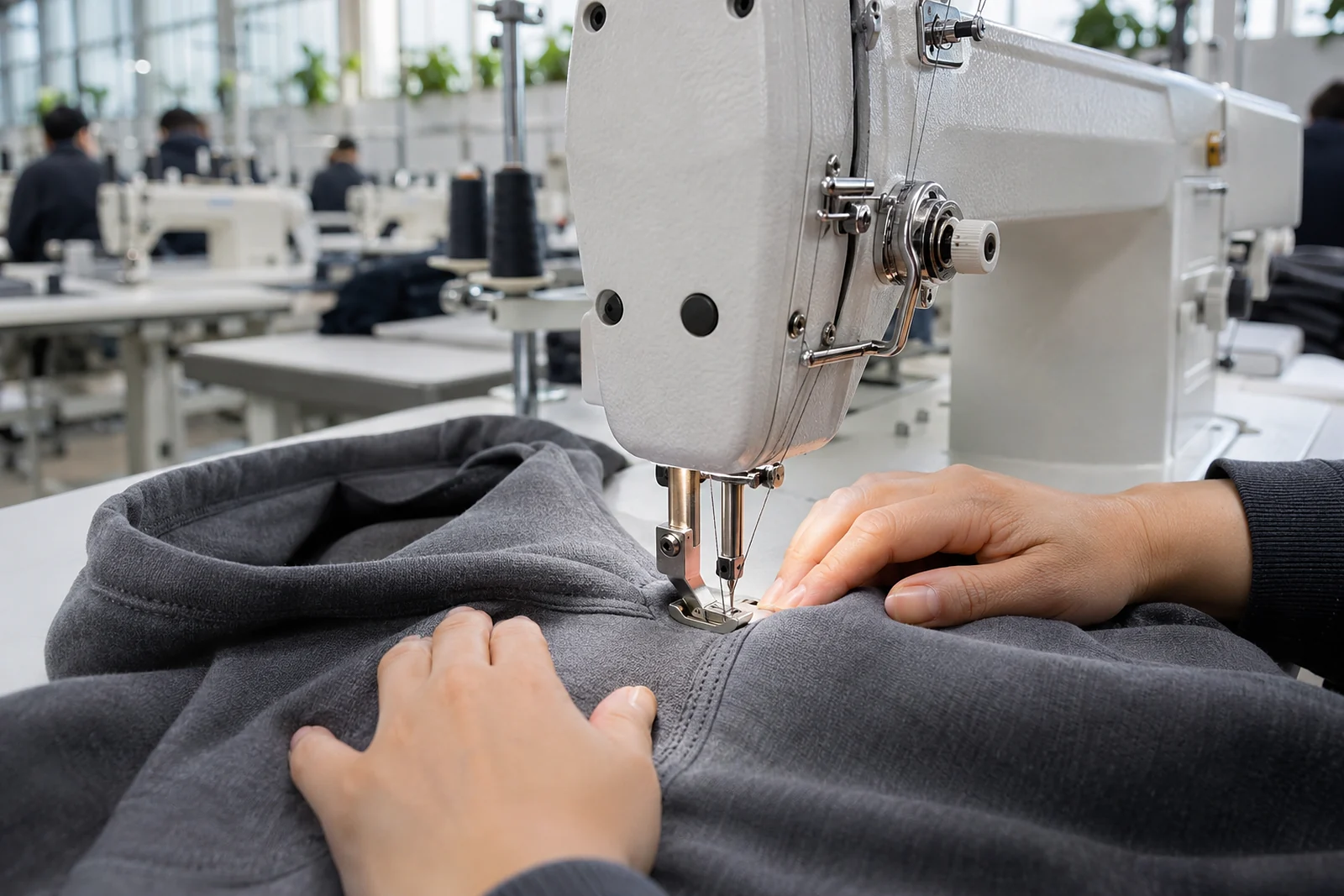
With the sample approved, cutting begins at scale. Fabric is laid and cut in bulk, then moves through sewing, and any customization (printing, embroidery, labeling) happens at this stage. Quality control checks typically happen both in-line during production and again at final inspection.
Step 6: Quality control and packing
Finished garments are inspected against the approved sample for consistency in stitching, measurements and finish. Approved units are then folded, tagged, and packed according to your specification: whether that's individual polybags, branded boxes, or bulk cartons.
Step 7: Shipping
The final step is logistics: whether by air (faster, more expensive) or sea freight (slower, more cost-effective for large orders). Lead times and shipping method should be planned early, since sea freight in particular needs to be factored into your launch timeline.
Understanding each stage helps you know what questions to ask and when. If you want to see this process applied to a specific product, our Services page breaks down each capability in more detail.