 ALIF THREAD
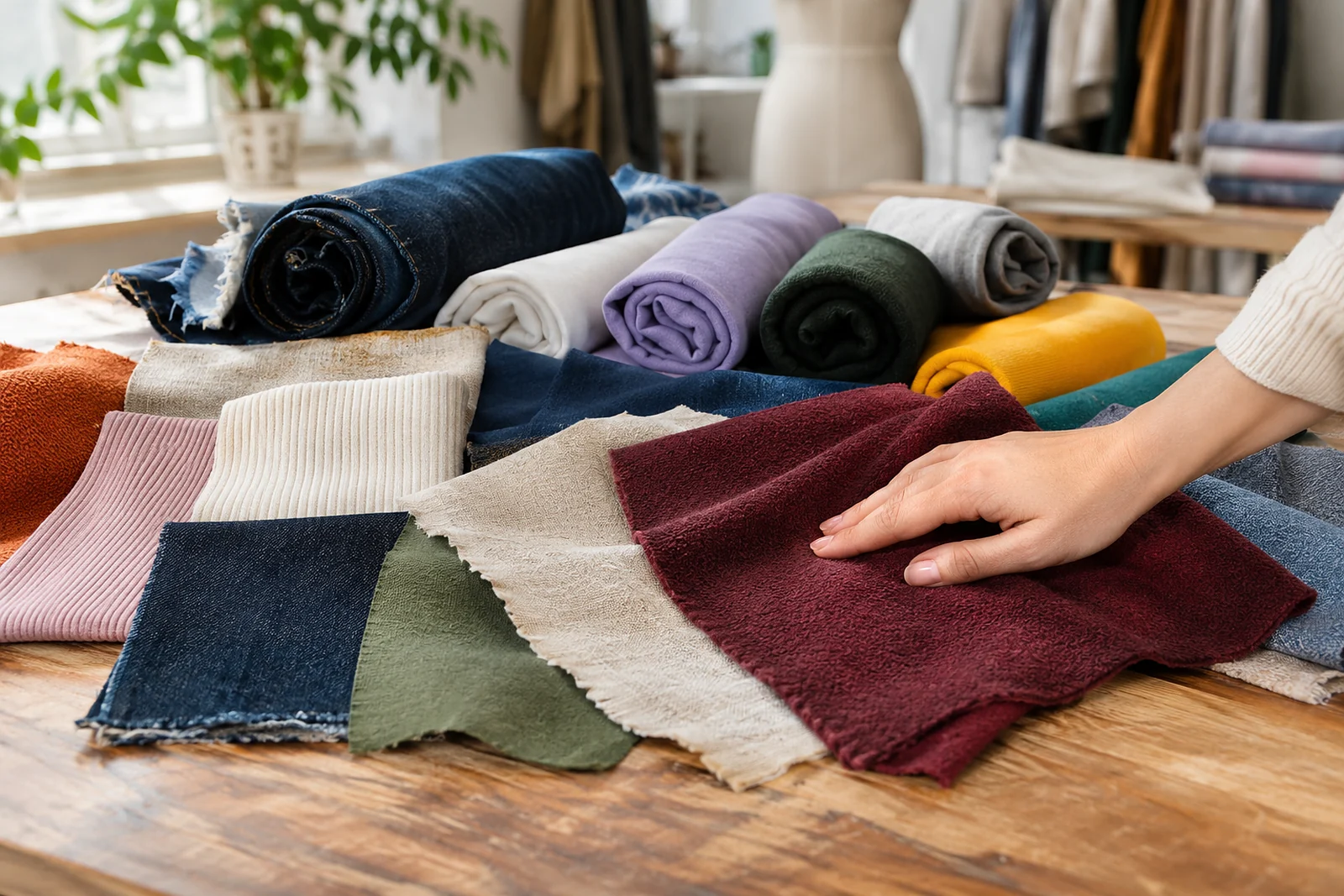
New brands often start fabric selection backwards: picking a fabric because it looks good on a swatch card, then trying to make the product work around it. A better approach starts with your actual use case and works forward. Here's the framework we walk new clients through.
Step 1: Define the end use first
Before touching a swatch, answer this: what will the customer actually do while wearing this? A gym-focused activewear brand has completely different fabric needs than a loungewear label, even if both products look similar on a hanger. Moisture-wicking, four-way stretch, and quick-dry properties matter enormously for performance wear and are almost irrelevant for a cotton loungewear set.
Step 2: Match fabric to climate and season
If you're selling primarily to warm-climate markets (Middle East, Southeast Asia, southern US), breathable natural fibers like cotton and linen blends outperform heavier synthetics. For colder markets, brushed fleece and heavier cotton-poly blends make more sense. Selling to multiple climates at once is one of the most common reasons brands end up needing two versions of the same style.
A quick reference
- Hot/humid climates: Lightweight cotton, linen blends, breathable jersey
- Cold climates: Fleece, heavyweight cotton, brushed interiors
- Athletic/performance: Polyester-spandex blends, moisture-wicking mesh
- Premium/luxury positioning: Higher-thread-count cottons, imported fabrics like Korean silk or Japanese cotton
Step 3: Set a realistic price ceiling per meter
Fabric cost is usually the single largest input cost in a garment. Before falling in love with a premium fabric, calculate what it does to your landed cost and retail price. A fabric that pushes your retail price out of your target customer's comfort zone isn't the "right" fabric, no matter how nice it feels.
Step 4: Test durability claims, don't just trust them
"Wrinkle-resistant" and "shrink-resistant" mean different things to different suppliers. Whenever possible, request a washed swatch (one that's been through 3-5 wash cycles) rather than judging fabric quality from an untouched sample straight off the roll.
Putting it together
The brands that get fabric selection right treat it as a business decision, not just an aesthetic one. Define the use case, match it to your target climate, set your cost ceiling, and verify durability before you commit to a bulk order. If you want to see real GSM ranges and applications side by side, our full fabric catalog is a useful starting reference point.