 ALIF THREAD
A buyer once sent us a sample with three kinds of decoration on one garment. Screen printing. Puff print. Heavy embroidery. Then came the hard part. They needed it finished in 24 hours. This is the story of how an in-house clothing manufacturer handles a request like that.
We will walk you through what happened that day. You will also see why having every process inside one factory changes what is possible for your brand.
The Day a Buyer Asked for a Sample in 24 Hours
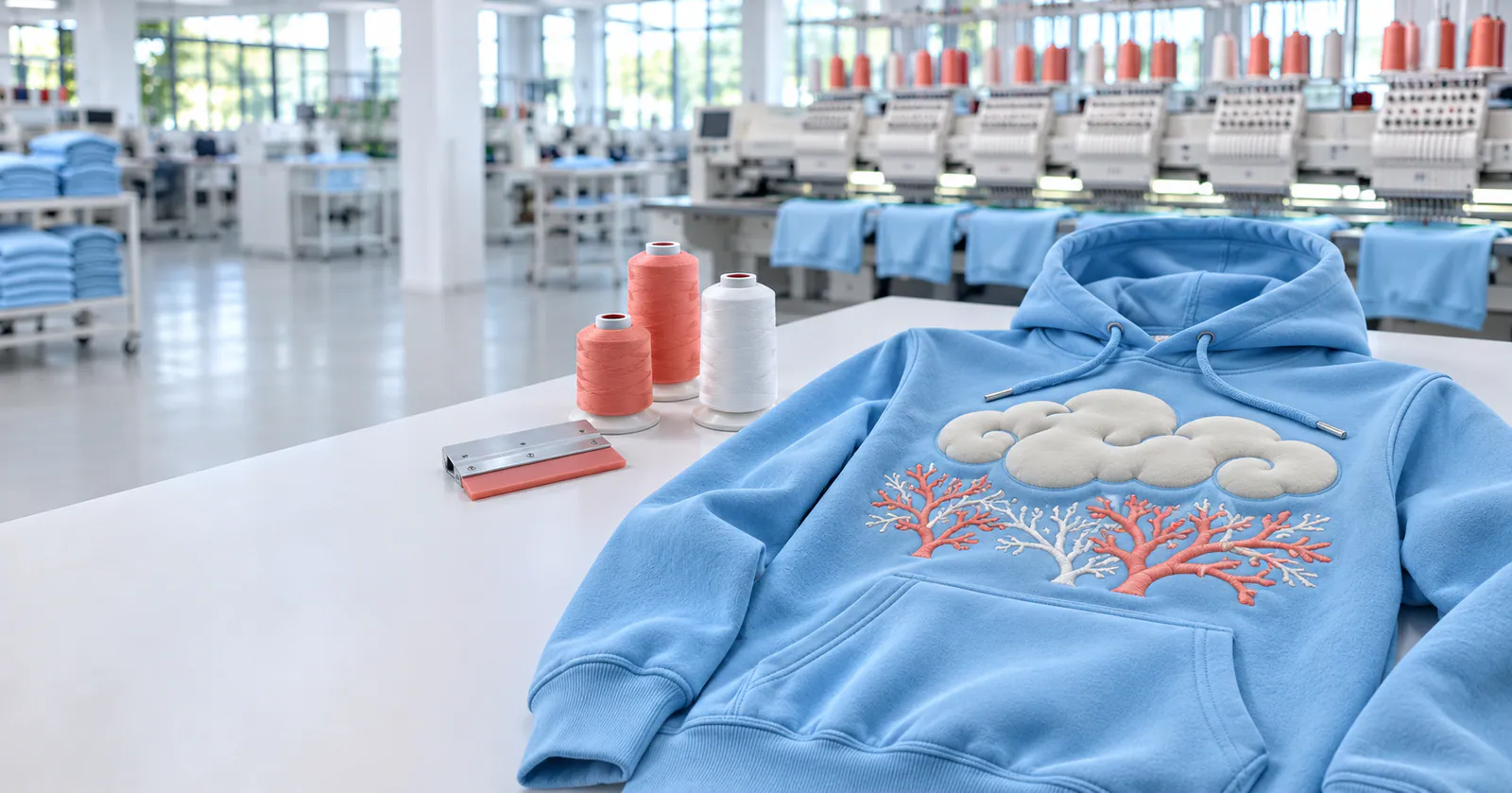
The request landed on our desk with a tight deadline and a busy design. The front had a screen print. Part of the artwork used puff print for a raised 3D feel. On top of that there was heavy embroidery with a lot of detail.
That kind of timeline is hard for most setups. Three decoration methods often means three different places and three different queues.
We said yes because we knew our own floor. Our pattern table and cutting were ready. Our screen printing team could start as soon as the panels were cut. Our embroidery machines were free in the same building. Stitching sat just a few steps away.
We finished the sample within 24 hours and sent it out. The buyer was very happy with it. For us that day proved something we already believed. When everything is under one roof you can move fast without cutting corners.
What Does an In-House Clothing Manufacturer Actually Do?
An in-house clothing manufacturer runs every main step inside its own factory. Nothing gets sent out to another workshop along the way.
At Alif Thread Industries this is how we work every day. Our team takes your garment from the first pattern all the way to the finished piece. We also run in-line checks during production and a final inspection against your approved sample.
Here is what sits inside our own walls.
- Pattern making and sampling
- Cut and sew production
- Screen printing plus puff print and DTF
- Flat embroidery and 3D puff embroidery
- Labels and packing
- Final checks against your approved sample
None of this goes out to another workshop. So nobody has to wait for a garment to come back from somewhere else. It also means one team stays responsible for your order from start to finish. If you have a question about any step you get an answer from the people doing the work.
Why Did Everything Under One Roof Make 24 Hours Possible?
It worked because the garment never had to leave our building. Each team could pick it up the moment the last one put it down.
Think about what normally slows a sample down. A garment gets cut in one place. Then it travels to a print shop and waits in line. After that it goes to an embroidery unit and waits again. Every trip adds hours or even days.
On our floor that travel time simply did not exist. When the print team finished the screen print we moved straight to the puff print. Then the embroidery team took over in the same building. If anything needed a small fix we walked over and fixed it on the spot.
Communication matters just as much. Our printers talk to our embroidery operators face to face. Our stitchers are right there too. One clear plan in one building beats a chain of phone calls between three different units. Nothing gets lost in a message passed along the line.
How Is Outsourced Decoration Different?
Outsourced decoration means the factory sends your garment to another unit for printing or embroidery. It can work for simple orders but it adds time and risk to complex ones.
Many workshops do not own embroidery machines or a print setup. That is normal in the trade. But it changes your sample in a few ways.
- Each trip between units adds waiting time.
- Changes take longer because the garment has to travel back.
- Colors and placement can shift when different teams handle each step.
- It is harder to know who is responsible if something goes wrong.
Outsourcing is fine for a plain tee with one small logo. For a design that mixes three methods an in-house setup is the better choice. You get one team working from one plan. You also get one person to talk to.
What Decoration Can You Combine on One Garment?
You can mix almost any of our printing and embroidery methods on the same piece. That was exactly what this buyer did.
We offer 16 printing techniques and 8 embroidery and embellishment options. Screen printing works well for bold artwork on bulk orders. Puff print gives a soft raised look. Embroidery adds texture and a premium feel. If you want to compare print methods side by side read our guide to DTG vs DTF vs screen printing.
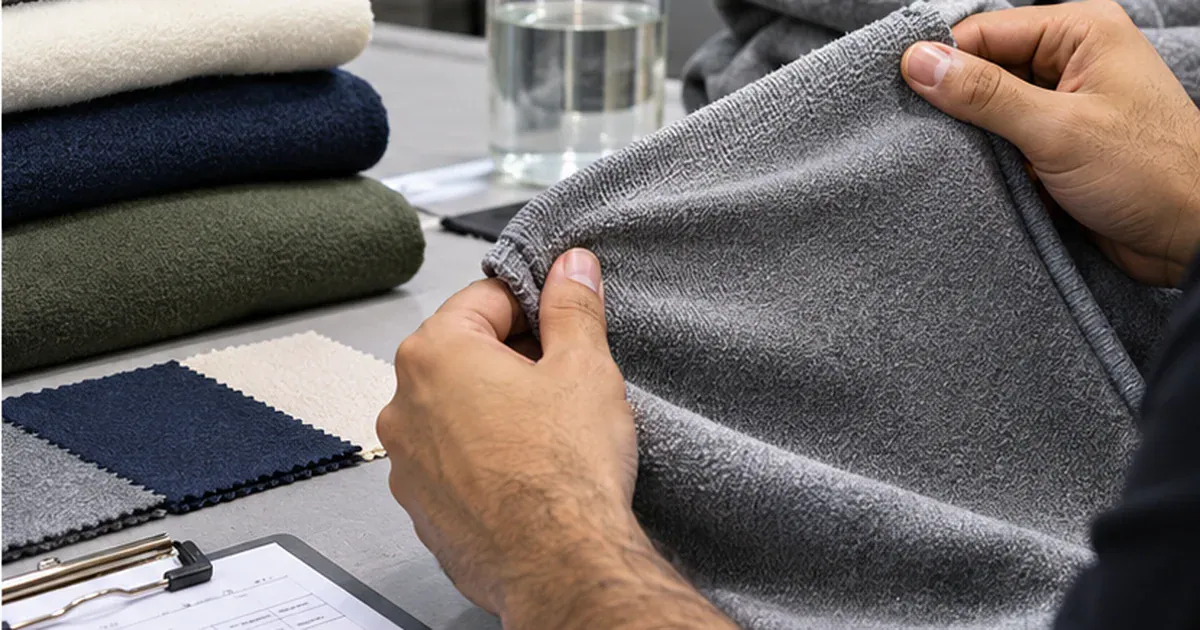
Fabric choice matters a lot when you stack methods. Heavy embroidery needs a fabric that holds its shape. That is why so many of these designs end up on hoodies. Our brushed fleece runs from 280 to 500 GSM and holds stitching well.
You can see real examples on our pages for custom embroidered hoodies and custom printed hoodies. Both show how print and stitch work together on one garment.
Is a 24 Hour Sample Normal?
No. It is not our standard timeline and we want to be honest about that. Most of our samples take 5 to 10 working days.
That normal window gives us time to source the right fabric and fine tune the pattern. It also lets us test where the print and embroidery sit. For most brands that is the smarter route because a careful sample saves money in bulk.
The 24 hour story shows what our setup can do when it really matters. Speed like that depends on the design. It also depends on having the fabric ready and on how busy our floor is that day. So please talk to us first if you have a rush deadline. We will tell you straight away whether it is possible.
Once your sample is approved bulk production takes 15 to 30 working days. Our minimum order is 50 pieces per color and design.
What Should You Check When a Rush Sample Arrives?
A fast sample still needs a full check before you approve it. Speed should never replace a careful look.
Start with the decoration. Check that the screen print sits in the right place. Press the puff print to see that it feels even. Look at the back of the embroidery for loose threads.
Then wash it once. Print and color should survive normal home washing. Labs use standard methods such as the AATCC test for colorfastness to laundering for this. A simple home wash still tells you a lot before bulk.
Finally measure the garment against your size chart. Write every change in one list and send it back. Photos with short notes help a lot. Alif Thread Industries will update the sample and confirm each point with you before bulk starts.
Need a Fast Sample? Talk to Us
Send us your design and tell us your deadline. We reply within 6 hours. Contact our team and we will tell you honestly how fast we can turn it around.