 ALIF THREAD
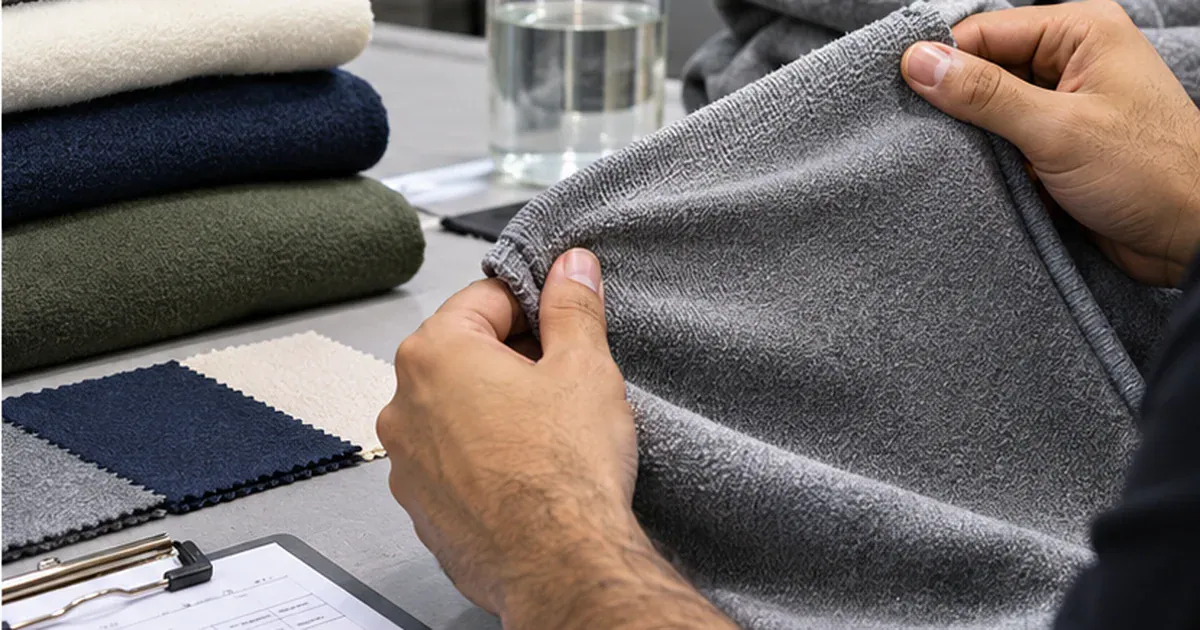
Some brands approve a sample because it fits perfectly. Then a production garment changes shape after washing. The tee gets shorter. The hoodie sleeve feels tight. The hem twists.
These problems often do not show in a first fit check. They come from how the fabric reacts to washing, drying and finishing.
Shrinkage testing helps you understand that behavior before fabric is cut for bulk. What you want is not a vague promise that the fabric is preshrunk. You want a documented result under agreed conditions, linked to your approved measurements and care label.
What is fabric shrinkage testing?
It measures how much a fabric changes size after a set care or processing procedure. A piece is measured before and after, so you can see how its length and width changed.
Some fabrics shrink, some grow and some twist in ways simple measurements miss. The result applies to the fabric and method tested. It is not a forecast for every wash, color or finished garment.
1. Why does shrinkage matter before cutting?
Cutting locks fabric into pattern shapes. If the fabric later shrinks more than expected, finished garments miss their measurements. Once a whole lot is cut, fixing that is hard and costly.
Take an oversized tee. The balance between body length and width defines the boxy look. If length and width shrink by different amounts, the shape changes even when each change is small. Our guide on the best GSM for oversized t-shirts explains why that shape matters.
For hoodies the body fabric, rib and hood lining can each react differently. That can cause puckering at cuffs and seams. So fabric behavior should be planned with the pattern, not treated as a number on a report.
2. Are shrinkage, growth and twisting the same?
No.
- Shrinkage: a measurement gets smaller after the process
- Growth: a measurement gets larger
- Distortion: the shape changes, such as twisting, skewing or wavy edges
A garment can pass a length check and still look wrong because the side seams twist after washing.
Knits and wovens react differently to water, heat and tumbling. Fiber alone does not decide the result. Yarn, construction, knitting or weaving tension, dyeing, finishing and washing all play a part. So do not compare two fabrics only by their composition or GSM.
3. Why test the exact fabric you will use?
An early swatch helps with first decisions. But a result from one version of a fabric does not approve another.
Two cotton jerseys can share the same composition and GSM and still behave differently, because of how they were knitted and finished. Confirm the composition, construction, finish, color and lot of the tested fabric. If the fabric or process changes, review the result again.
Our fabric guide lists the fabrics you can discuss with us during development.
4. Which wash and dry method should you use?
A percentage means little unless you know the conditions. A cool wash and air dry gives a different result from a hot wash and tumble dry. The number of cycles matters too.
Before testing, write down:
- Wash temperature
- Machine program
- Detergent, where relevant
- Drying method
- Number of cycles
- Whether you test fabric or a finished garment
Standards such as ISO 6330 and ISO 5077 can be used where suitable. Naming a standard alone is not a full brief. You still need to agree the method and the pass rules. This industry guide to shrinkage approval before cutting also stresses linking the result to the exact fabric and the cutting decision.
5. How is shrinkage calculated?
Compare the measurement before care with the measurement after. Divide the change by the original and show it as a percentage. Make it clear which sign means shrinkage and which means growth.
For example, a marked length measures 50 cm before the wash and 48 cm after. The change is 2 cm, which is 4% of the original. This is only a maths example. It is not a tolerance or a pass limit.
Record length and width separately. A fabric can change more across its width than along its length. Then compare the numbers with your product requirements.
6. What does preshrunk really mean?
Preshrunk means the fabric was treated to reduce later shrinkage. It does not mean the garment can never shrink.
Ask what treatment was used, what change remained and under which conditions it was measured. Finishing can improve stability, but results vary by fabric. Labels like premium cotton or compacted fabric are not proof. A useful supplier answer names the fabric and the test, not just an adjective.
7. Fabric test or garment test: which do you need?
A fabric test shows how the material behaves on its own. A garment test shows how materials and construction behave together.
Thread, rib, labels, linings, prints and seams can all react differently in the wash. In a pullover hoodie the main fleece may be fine while the rib cuffs tighten or the hood seam puckers. A garment wash test shows those effects. Not every simple garment needs a big test program, but know which risks remain if you rely only on fabric data.
8. How do results connect to the approved fit?
Shrinkage results should feed into the pattern, the size chart and final approval. A sample that measures right before washing can still miss your intended fit after care.
Decide whether measurements are set before washing, after a set wash or both. Then everyone compares numbers taken at the same stage.
- Oversized tee: check sleeve opening, body length and chest balance
- Fitted activewear: check stretch and recovery as well as size
- Trousers: check leg length, waistband and seam twisting
Our size grading and fit approval guide and tech pack guide explain how to keep specs consistent.
9. When does pattern compensation make sense?
Some products can be built with planned allowances for expected shrinkage. That needs reliable data and a clear measurement target.
Making every pattern piece bigger by the same percentage can distort the garment. Length and width react differently, and parts may not change equally. The pattern maker should adjust the affected pieces and confirm the result with a new sample.
Compensation does not fix an unsuitable fabric. If results vary a lot between lots, or the fabric twists badly, review the fabric or finishing first.
10. What should you agree before cutting?
- The approved fabric and its color or lot
- The stage at which it was tested
- The wash and dry method used
- Measured length and width changes
- Any twisting, waviness or surface damage
- Agreed pass rules for the product
- Whether a garment wash test is needed
- Any pattern or measurement changes before cutting
- Who approves the final decision
If the fabric changes later, check whether the old result still applies.
11. Do different colors need separate tests?
Sometimes. Different colors can go through different dyeing and finishing. Even with the same construction, processing can change how the fabric behaves. Discuss how colors and lots will be covered in your testing plan. Do not assume one color's result covers all of them.
12. Who sets the pass limit?
There is no single limit for every garment. A relaxed casual piece, a close fitting product and an industrially washed uniform can all need different limits. The right limit depends on fit, fabric, care method, contract and any relevant standards. A result is only useful when compared with an agreed requirement.
13. What if a fabric fails?
Review it before cutting is approved. First confirm the fabric was identified correctly and the test followed the agreed method. Then find out whether the problem is length shrinkage, width shrinkage, twisting or a mix.
Fixes can include changing the finishing, choosing another fabric, adjusting the pattern or running more tests. Check any pattern change with a physical sample. Write down the agreed action, and only cut once the fabric and garment requirements are settled.
Fabric development at Alif Thread Industries
We are a custom clothing manufacturer in Sialkot, Pakistan. We handle fabric sourcing, development, customisation and bulk production, and you can share your fabric performance needs with us at the start. Most categories start from 50 pieces per color and design.
To discuss a fabric concern, send your design, chosen fabric, care method, fit expectations, quantities and market through our contact page. See the full process on our services page or read our garment quality control checklist.