 ALIF THREAD
You have found a factory you like. Now comes the part that worries most new brands. How do you import clothing from Pakistan to the USA, the UK or the EU without trouble at customs?
This guide walks you through it one step at a time. We start with checking the factory and making a sample. Then we look at payment, freight, labels, REX for EU buyers and your true landed cost.
Why Brands Import Clothing from Pakistan
Brands come to Pakistan for cotton basics, knitwear and garments made to their own designs. Sialkot in particular has a long history of making sportswear and clothing for export.
For a small brand the biggest draw is flexibility. You do not need a huge order to get started. At our factory the minimum is 50 pieces per color and design. That means you can test a few styles before you put real money into stock. This works well for new labels that want to test the market first.
Most first orders are simple pieces that sell all year. Custom T-shirts and heavyweight hoodies are the usual starting point. They are quick to sample and easy to reorder.
Once your sizes and quality are proven on basics, you can add trickier styles with much less risk. Starting simple also makes your first landed cost far easier to work out.
How Do You Find and Check a Factory?
Ask for proof and not promises. A good factory will show you its registrations, real product photos and clear answers about MOQ and timelines.
These are the first things we would check if we were in your shoes.
- Is the company a member of the local chamber of commerce?
- Can they show recent work that looks like your product?
- Do they reply fast and answer technical questions properly?
- Will they make a paid sample before bulk?
Our own registrations include SCCI membership, REX registration and Alibaba Verified status. You can see them on our About Us page. For a longer list of checks, read our guide on how to find a reliable clothing manufacturer in Pakistan.
A video call from the factory floor is also a fair request. You get to see the machines and meet the team before you send any money. A good factory will be happy to show you around.
What Happens During Sampling?
Sampling turns your idea into one real garment that you approve before bulk. It is the most useful step for avoiding problems later.
You send us a tech pack or clear reference photos. We confirm the fabric, color, size and any print or embroidery. Then we make the sample. At our factory this takes 5 to 10 working days.
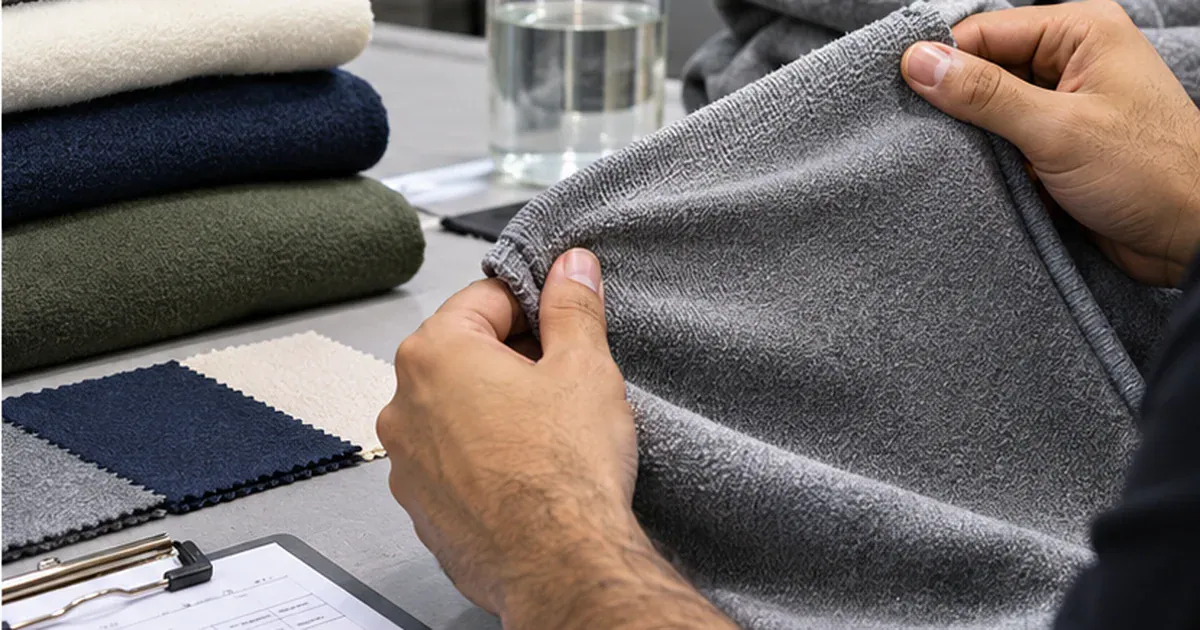
Fabric has a big effect on the result, so choose it early. Our cotton fabric page shows the GSM range we use for T-shirts and casual wear.
When the sample arrives, take your time with it. Measure it against your size chart. Wash it once and measure it again. Look closely at the stitching, the print position and the label. Put every change in one list and send it back. A clear list saves you a second or third sample round. Photos with notes on them help even more.
Only approve the sample if you would be happy to receive 500 pieces exactly like it. The bulk order is made to match it.
Agreeing Payment and Placing the Order
Put the price, payment terms and delivery terms in writing before production starts. Clear paperwork protects you and the factory.
Your order confirmation should list every style and color. It should show the size breakdown, the quantity, the unit price and the approved sample. It should also name the delivery term. EXW, FOB and DDP are the common ones. Each term decides who pays for freight, insurance and import charges. Ask your freight forwarder which one fits your setup.
Price depends on the fabric, quantity, print method and trims. Ask the factory to show you how each of these changes the unit price. Once the order is confirmed, bulk production takes 15 to 30 working days after sample approval.
Keep copies of the commercial invoice and the packing list. Your customs broker will need both. Missing or unclear papers are one of the most common reasons a shipment gets held at the port.
Should You Ship by Air or Sea?
Air is better for small and urgent orders. Sea is better for bigger orders when you have time to wait.
Here is a simple way to think about it.
- Air or express courier suits samples, first orders and quick restocks. It costs more per kilo.
- Sea freight suits larger volumes. It is slower but usually cheaper per piece on a big shipment.
- A mix of both works well too. Send part of the order by air for your launch and the rest by sea to restock.
Your freight forwarder can quote both options for your shipment size. Ask for the full door to door cost and not just the freight line.
If you choose sea, plan your launch date around the slower route. That way a delay at sea does not cost you a selling season. It also helps to ask the forwarder what happens at the port when the goods arrive.
What Must Go on Your Clothing Labels?
Your labels must follow the rules of the country where the clothes are sold. Fiber content, care instructions and country of origin are the usual basics.
Rules are not the same in the USA, the UK and the EU. The language, the symbols and even the placement can change. Check the exact rules with your customs broker or the official agency in your market before you sign off on labels.
Once you know what is needed, we sew it in for you. We add care labels with fiber content and country of origin. We can also add your woven neck labels and hang tags.
Send your label artwork together with the tech pack. That way it becomes part of the approved sample. Changing labels after bulk production is slow and costly. It can also hold up the whole shipment.
Check one last thing on the sample. The label has to match the fabric. A label that says 100% cotton on a blended fabric causes problems at customs and with your customers.
What Does REX Mean for EU Buyers?
REX is the EU system that registers exporters who make statements about where their goods come from. It matters when you want to claim a lower duty rate under an EU preference scheme.
Whether a lower rate applies depends on your product and the rules of origin. So please do not assume it. Look up your product code on the EU's Access2Markets trade assistant. It shows the tariff, the rules of origin and the papers customs will ask for.
Alif Thread Industries is a REX registered exporter. That means we can prepare the origin statement your EU broker may ask for when your product qualifies. Just tell us at the order stage if you plan to claim a preference. The paperwork will then be ready when the goods ship.
UK buyers have their own scheme and their own tariff. The rules differ from the EU, so check them separately on the UK Trade Tariff.
How to Work Out Your Landed Cost
Landed cost is what it really costs to get one garment into your warehouse. Price your range from this number and not from the factory price.
Add these together.
- The factory price for the full order
- Freight and insurance
- Import duty for your product code
- Import VAT or sales tax where it applies
- Customs broker fees and local delivery
Duty rates change and depend on the exact product code. Always check the official source. In the USA use the Harmonized Tariff Schedule. In the UK use the UK Trade Tariff. For the EU use Access2Markets.
Now divide the total by the number of pieces. That is your true cost per garment. Work it out again for every new shipment because freight rates keep moving. A simple spreadsheet makes it easy to compare one shipment with the next.
Plan Your First Import With Us
Alif Thread Industries makes custom clothing in Sialkot for brands across the USA, UK and Europe. We reply within 6 hours. Send us your design and target quantities and we will start with a sample.