 ALIF THREAD
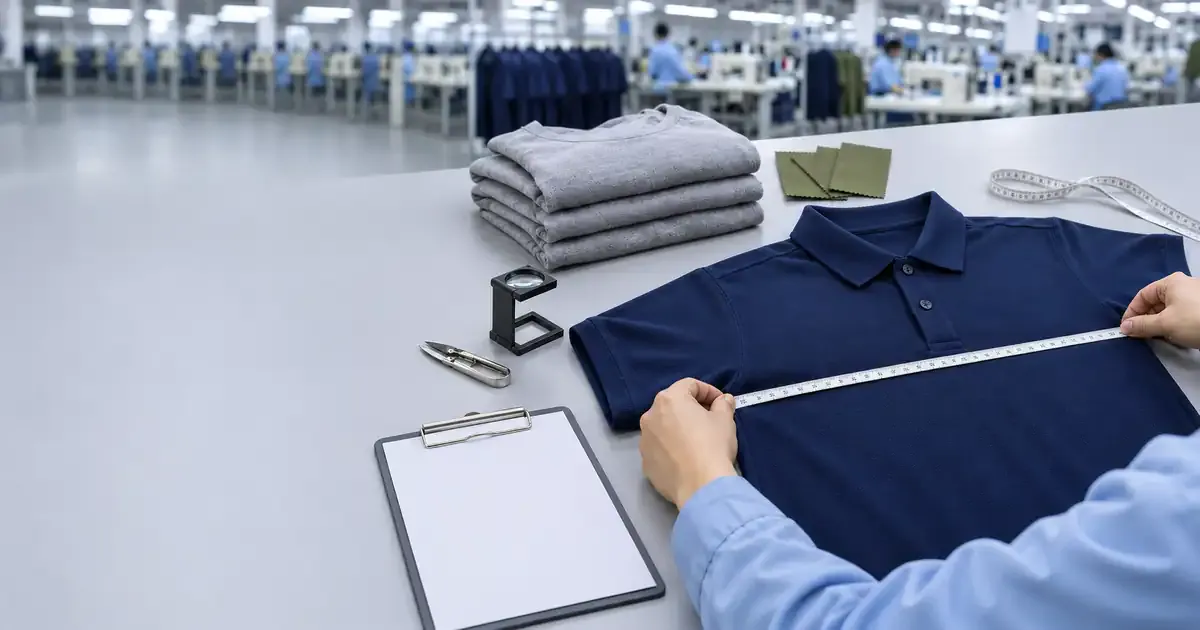
Consistent product quality is one of the foundations of a successful clothing brand. Customers expect garments to fit correctly, maintain their appearance after washing, and deliver the quality promised by the brand.
For clothing businesses working with overseas manufacturers, establishing clear quality requirements before production begins is particularly important.
A garment may look excellent in its initial sample, but without agreed specifications and production inspections, inconsistencies can appear throughout a bulk order.
This guide explains the essential garment quality control checks that clothing brands should consider before production, during manufacturing, and before shipment.
What Is Garment Quality Control?
Garment quality control is the process of checking clothing against agreed product specifications and quality requirements throughout manufacturing.
It involves evaluating fabric, measurements, construction, decoration, functionality, labeling, finishing, and packaging to identify defects and reduce inconsistencies.
Effective quality control begins before bulk production rather than relying entirely on final inspections.
For international clothing brands, a documented quality control checklist helps communicate expectations clearly and provides a consistent basis for evaluating finished products.
1. Establish Clear Product Specifications
Before manufacturing begins, clothing brands should provide detailed information about their intended product.
A well-prepared garment tech pack should include:
- Technical garment drawings
- Fabric composition and weight
- Measurement specifications
- Size grading requirements
- Measurement tolerances
- Stitching and construction details
- Artwork dimensions and placement
- Color references
- Labeling requirements
- Packaging instructions
Without clear specifications, manufacturers and buyers may interpret the same design differently.
For example, an oversized T-shirt may have different shoulder widths, sleeve lengths, and body proportions depending on the brand's intended fit.
Providing exact measurements reduces ambiguity and gives the quality inspection team measurable requirements.
2. Inspect Fabric Quality Before Cutting
Fabric quality directly affects garment appearance, comfort, durability, and overall customer satisfaction.
Before fabric is cut for production, clothing brands should establish the required material specifications and discuss appropriate inspection procedures with their manufacturer.
Important fabric quality checks include:
- Fabric composition
- Fabric weight in GSM
- Color consistency
- Fabric width
- Surface texture
- Visible holes or damage
- Stains and contamination
- Shrinkage performance
- Pilling resistance
- Colorfastness
Fabric requirements vary by garment category. A heavyweight streetwear hoodie, for example, requires different material characteristics from a lightweight running shirt.
Selecting appropriate fabric and confirming its quality before production can help prevent material-related defects from affecting an entire order.
Explore the fabric selection options available at Alif Thread Industries.
3. Approve a Pre-Production Sample
A pre-production sample is a garment developed to confirm the intended product specifications before bulk manufacturing.
Where possible, it should use the actual approved production materials, trims, decoration methods, and construction details.
Clothing brands should examine the following elements during sample approval:
- Fit: Overall silhouette and comfort
- Measurements: Compliance with the measurement chart
- Fabric: Composition, weight, texture, and appearance
- Construction: Seams, stitching, and reinforcement
- Color: Consistency with approved references
- Branding: Logo dimensions and placement
- Labels: Accuracy, position, and appearance
- Functionality: Zippers, buttons, pockets, and drawstrings
Any required changes should be communicated clearly and documented before bulk manufacturing begins.
The final approved sample should serve as a physical reference alongside the tech pack and written specifications.
4. Check Garment Measurements and Size Consistency
Incorrect sizing is a common concern for clothing brands because it can contribute to customer complaints, exchanges, and returns.
Measurement requirements should be established for each garment size before production.
Common measurement points include:
- Chest width
- Body length
- Shoulder width
- Sleeve length
- Waist circumference
- Hip measurements
- Inseam length
- Leg opening
- Neck opening
The relevant measurement points depend on the garment type.
Brands should also establish acceptable measurement tolerances with their manufacturer. Tolerances define how much an actual garment measurement may differ from its specified measurement.
A garment should not be evaluated solely by its size label. Its actual dimensions must be compared with the approved measurement chart.
5. Inspect Stitching and Garment Construction
Stitching quality affects the durability, appearance, and structural integrity of clothing.
Inspectors should examine important construction areas according to the garment's design and intended use.
Common stitching and construction defects include:
- Skipped stitches
- Broken stitches
- Loose threads
- Open seams
- Uneven stitching
- Seam puckering
- Incorrect seam alignment
- Fabric damage near needle holes
- Weak reinforcement
- Unbalanced seam tension
Different garments require different construction methods.
Activewear may require flexible seams that support movement, while workwear may require reinforced stitching in areas exposed to greater stress.
Clothing brands should discuss suitable construction techniques with their manufacturer during product development.
6. Check Printing, Embroidery, and Custom Branding
Custom decoration is a significant part of the identity of many streetwear, sportswear, and private label clothing brands.
Even when garment construction is acceptable, incorrectly positioned or damaged artwork can make a product unsuitable for sale.
Printing and embroidery inspections should consider:
- Artwork accuracy
- Design dimensions
- Logo placement
- Color appearance
- Print alignment
- Surface consistency
- Embroidery tension
- Loose embroidery threads
- Fabric distortion
- Decoration durability
The appropriate inspection and testing methods depend on the fabric, artwork, and decoration technique.
For example, embroidered logos should be examined for clean outlines and appropriate stitch formation, while printed graphics may require adhesion and wash-performance checks.
Explore the available custom printing and embroidery services at Alif Thread Industries.
7. Conduct Appropriate Garment Performance Tests
Visual inspection alone cannot establish how a garment will perform during normal use.
Depending on the product type and intended market, clothing brands may require additional performance testing.
Examples include:
- Wash shrinkage: Evaluates dimensional changes after laundering
- Colorfastness: Evaluates resistance to color fading or transfer
- Pilling resistance: Evaluates the formation of surface fiber balls
- Seam strength: Assesses seam resistance to applied force
- Stretch recovery: Evaluates the ability of stretch fabrics to recover their shape
- Zipper functionality: Checks fastening operation
- Print durability: Evaluates decoration performance under specified conditions
- Fabric weight: Confirms compliance with material specifications
Formal laboratory testing may be appropriate for products with specific performance, safety, or regulatory requirements.
Brands should agree on the required test methods and acceptance criteria before placing a bulk manufacturing order.
8. Understand the Three Main Stages of Garment Inspection
A structured inspection process helps manufacturers and buyers identify problems at different stages of production.
Pre-Production Inspection
This stage focuses on confirming materials, specifications, samples, artwork, and production readiness before bulk manufacturing begins.
Its purpose is to identify potential problems while changes are still relatively straightforward.
In-Line Production Inspection
In-line inspection takes place while garments are being manufactured.
It allows production teams to identify developing issues involving measurements, stitching, construction, decoration, and workmanship.
Detecting problems during production can help prevent the same defect from being repeated across a large quantity of garments.
Final Garment Inspection
Final inspection takes place near the completion of production and before shipment.
It focuses on evaluating finished garments against the approved product requirements.
This may include appearance, measurements, functionality, quantities, branding, finishing, and packaging.
9. What Is AQL in Garment Quality Control?
AQL stands for Acceptance Quality Limit. It is used in statistical sampling plans to support decisions about whether a production lot meets agreed acceptance criteria.
Instead of inspecting every garment, a randomly selected sample may be examined according to a defined inspection plan.
Garment defects are commonly classified into three categories.
- Critical: A hazardous sharp object inside a garment
- Major: An open seam or incorrect measurements outside agreed tolerances
- Minor: A small cosmetic imperfection that does not materially affect functionality
The appropriate classification depends on the product and the buyer's agreed requirements.
An AQL inspection plan should establish the lot size, inspection level, applicable sampling procedure, and acceptance criteria before inspection.
Commonly used AQL values in apparel sourcing include 2.5 for major defects and 4.0 for minor defects, although these are not universal requirements.
Safety-related defects generally require stricter acceptance criteria.
An accepted sampling inspection does not guarantee that every garment in the shipment is defect-free. Brands may require additional controls or full inspection depending on product risk and contractual requirements.
10. Inspect Labels, Hang Tags, and Packaging
Private label clothing brands should assess more than the garment itself before approving a shipment.
Branding and packaging should be checked against the agreed specifications.
Important checks include:
- Brand name and logo accuracy
- Neck label placement
- Size label accuracy
- Care instructions
- Fiber content information
- Country-of-origin information
- Hang tag attachment
- Barcode accuracy, where applicable
- Individual packaging
- Carton markings
- Size and color assortment
- Order quantities
International brands should identify applicable labeling and product requirements for their destination market before production.
Incorrect labeling can create additional costs and delays even when garment workmanship is acceptable.
11. Garment Quality Requirements by Product Category
Different clothing categories require different inspection priorities.
- T-shirts: Fabric weight, shrinkage, neck ribbing, and print placement
- Hoodies: Fleece quality, stitching, pockets, cuffs, and drawstrings
- Jeans: Denim quality, washing consistency, hardware, and seams
- Sportswear: Stretch recovery, seam flexibility, fit, and decoration
- Jackets: Zippers, lining, seams, hardware, and product-specific performance
- Tracksuits: Color matching, measurements, and construction consistency
- Workwear: Reinforcement, durability, functionality, and specified performance
- Kidswear: Construction, fit, trims, and applicable product safety requirements
- Modest wear: Fabric appearance, coverage, measurements, and construction
- Activewear: Stretch, recovery, seam performance, and movement comfort
A product-specific inspection checklist is generally more useful than applying identical requirements to every clothing category.
12. Common Clothing Manufacturing Defects and Prevention
The following list highlights common manufacturing concerns and practical preventive measures.
- Incorrect garment sizing: Approved measurement chart and production measurements
- Excessive shrinkage: Fabric and garment testing before bulk approval
- Color variation: Approved color standards and material shade checks
- Cracked printing: Suitable decoration selection and durability testing
- Uneven stitching: Machine setup and in-line construction checks
- Incorrect logo placement: Approved artwork and placement measurements
- Incorrect labels: Label approval before bulk application
- Damaged packaging: Agreed packing instructions and shipment inspection
- Missing quantities: Final quantity and assortment verification
Brands should document defects, request corrective action where necessary, and confirm whether affected garments meet the agreed acceptance criteria before shipment.
13. How to Choose a Clothing Manufacturer with Reliable Quality Control
Clothing brands should evaluate a manufacturer's quality processes rather than relying entirely on a low quotation or attractive product photographs.
Before selecting a manufacturing partner, consider asking:
- Does the manufacturer provide physical samples before bulk production?
- How are fabric requirements confirmed?
- Can the factory follow a detailed tech pack?
- Are measurements checked during production?
- How are manufacturing defects identified and addressed?
- What final inspection procedures are used?
- Can product-specific testing requirements be accommodated?
- How are changes to approved specifications communicated?
Clear answers can help brands evaluate whether the manufacturer is suitable for their product requirements and long-term sourcing plans.
Quality Control at Alif Thread Industries
Alif Thread Industries is a custom clothing manufacturer and exporter based in Sialkot, Pakistan, supporting international apparel brands with custom manufacturing, OEM production, and private label services.
Our manufacturing process includes fabric sourcing, pattern development, physical sampling, cut-and-sew production, custom decoration, and packaging.
Our published manufacturing workflow includes sample approval before bulk production, in-line quality checks, and final inspection against the approved sample.
Minimum order quantities start from 50 pieces for eligible products, subject to material, color, design, and manufacturing requirements.
Whether you are developing a streetwear collection, sportswear range, workwear line, or private label apparel business, communicating your specific quality requirements early can help establish a clearer production process.
Frequently Asked Questions
What is quality control in garment manufacturing?
Garment quality control involves inspecting materials, construction, measurements, decoration, finishing, and packaging against agreed product specifications throughout the manufacturing process.
How can clothing brands check garment quality before bulk production?
Brands can review fabric specifications, request physical samples, check measurements, evaluate construction, and arrange appropriate performance tests before approving bulk production.
What are the main stages of garment quality inspection?
The main stages are pre-production inspection, in-line production inspection, and final inspection before shipment.
What does AQL mean in garment manufacturing?
AQL stands for Acceptance Quality Limit. It is used within statistical sampling procedures to determine whether an inspected production lot meets agreed acceptance criteria.
What are common garment manufacturing defects?
Common defects include measurement inconsistencies, incorrect color shades, skipped stitches, open seams, damaged printing, incorrect labels, and poor finishing.
Can I request a sample before placing a bulk clothing order?
Yes. Alif Thread Industries provides sample development services so buyers can evaluate their product before confirming bulk production.
Why is garment quality control important for startup clothing brands?
Quality control helps startup brands identify manufacturing inconsistencies, protect their reputation, reduce avoidable product problems, and establish more consistent product standards.
Is final inspection enough to ensure garment quality?
Final inspection is important, but it is more effective when combined with clear specifications, sample approval, material checks, and inspections during production.
Start Your Custom Clothing Manufacturing Project
Developing a successful clothing collection requires more than choosing a design. Fabric selection, product construction, customization, and quality requirements all contribute to the final result.
Alif Thread Industries supports international clothing brands with custom apparel manufacturing and private label production.
Share your design references, tech pack, preferred materials, order quantity, and quality requirements to discuss your next manufacturing project.
Alif Thread Industries
Custom Clothing Manufacturer and Exporter
Sialkot, Punjab, Pakistan
Email: info@alifthreadindustries.com
Phone and WhatsApp: +92 328 5508339