 ALIF THREAD
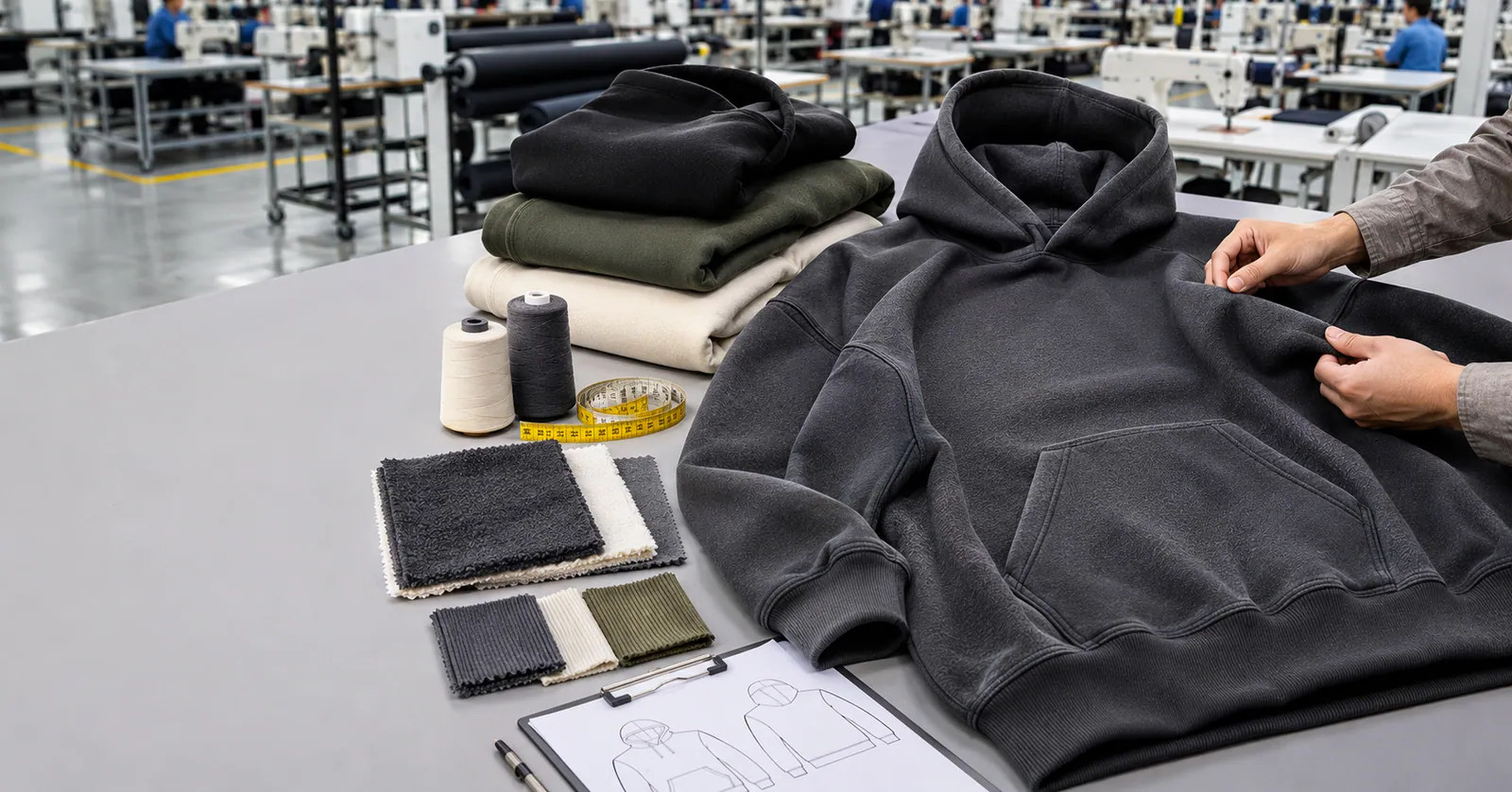
Heavyweight hoodie manufacturing has become an important category for streetwear labels, premium casualwear businesses, and private label clothing brands.
Heavyweight hoodies are often selected for their structured appearance, substantial fabric feel, and distinctive silhouettes. However, producing a premium hoodie involves more than choosing thick fabric.
Fabric composition, GSM, pattern development, construction, printing, embroidery, and finishing all influence the final product.
This guide explains how heavyweight hoodies are manufactured and what clothing brands should consider before developing a custom hoodie collection.
What Is a Heavyweight Hoodie?
A heavyweight hoodie is a sweatshirt-style garment made using relatively substantial fabric, commonly cotton fleece, cotton-polyester fleece, or French terry.
The term heavyweight does not have one universal definition across the apparel industry.
Manufacturers generally use fabric weight, measured in GSM, to help describe the material.
Heavyweight hoodies are frequently developed for streetwear collections, premium casualwear brands, and clothing businesses seeking structured oversized garments.
1. Understanding GSM in Hoodie Manufacturing
GSM stands for grams per square meter and describes the weight of fabric.
Understanding GSM helps clothing brands compare different fabric options.
240–300 GSM Hoodies
These fabrics are relatively lightweight and may be suitable for lighter hoodies, layering garments, and transitional-season collections.
300–350 GSM Hoodies
This range is commonly considered for medium-weight casual hoodies and everyday sweatshirts.
350–400 GSM Hoodies
These fabrics offer more substantial weight and can be suitable for premium casualwear and streetwear designs.
400–450 GSM Hoodies
This range is frequently considered for heavyweight hoodies requiring a structured appearance and substantial fabric feel.
450+ GSM Hoodies
Very heavyweight fabrics may be selected for specialized streetwear collections and garments designed around a particularly substantial silhouette.
These ranges are general references rather than universal industry standards.
A higher GSM does not automatically mean better garment quality.
Fabric composition, knitting construction, finishing, and garment development remain important.
2. Choosing the Best Fabric for Heavyweight Hoodies
Fabric selection influences garment comfort, appearance, durability, shrinkage, and production costs.
Cotton Fleece
Cotton-rich fleece is commonly selected for streetwear and casual clothing because of its comfort and substantial feel.
Its performance depends on fabric construction, fiber quality, and finishing.
Cotton-Polyester Fleece
Cotton-polyester blends can provide a balance of comfort, durability, and dimensional stability.
The final properties depend on the blend ratio and fabric construction.
Brands should specify the desired composition rather than treating every fleece blend as identical.
French Terry
French terry commonly features a smooth outer surface and looped interior.
It may offer a different hand feel and thermal experience from brushed fleece.
French terry is often considered for contemporary casualwear and premium streetwear.
Brushed Fleece
Brushed fleece has a raised, soft surface created through a finishing process.
It is frequently selected for comfortable hoodies intended to provide a soft interior feel.
Clothing brands should evaluate fabric appearance, pilling resistance, shrinkage, and washing performance before confirming production.
Explore the available fabric sourcing options at Alif Thread Industries.
3. Oversized vs. Regular Fit Hoodies
Fit is an essential part of hoodie design.
Two garments produced using the same fabric may look completely different because of their pattern construction.
Regular Fit Hoodies
Regular fit hoodies generally follow conventional body proportions.
They are suitable for casual clothing brands, promotional apparel, and everyday collections.
Oversized Hoodies
Oversized hoodies are intentionally designed with additional volume and a relaxed silhouette.
Common characteristics include:
- Wider chest measurements
- Dropped shoulder seams
- Relaxed sleeves
- Roomier armholes
- Additional body width
- Adjusted sleeve proportions
- Structured hood construction
An oversized hoodie should not simply be a regular hoodie manufactured in a larger size.
The pattern should be developed specifically for the intended fit.
Boxy Fit Hoodies
Boxy fit hoodies emphasize a wider, more structured silhouette.
Depending on the design, they may feature a relatively shorter body length and wider proportions.
This fit is often selected for contemporary streetwear collections.
4. Important Heavyweight Hoodie Construction Details
Garment construction influences both durability and final appearance.
Double-Layer Hood Construction
A double-layer hood can provide additional structure and a more substantial appearance.
However, it also increases fabric consumption and may affect manufacturing cost.
Ribbed Cuffs and Hem
Ribbing is commonly used at the sleeve cuffs and bottom opening.
The fabric's elasticity, recovery, and attachment quality influence how well the garment maintains its shape.
Kangaroo Pocket Construction
Kangaroo pockets are widely used on pullover hoodies.
Brands should specify pocket dimensions, placement, stitching, and reinforcement requirements.
Stitching and Seams
Important construction checks include:
- Consistent seam allowances
- Correct stitch tension
- Secure shoulder seams
- Strong pocket attachments
- Clean garment finishing
- Symmetrical construction
- Appropriate seam reinforcement
Construction requirements should be included in the approved garment specification.
5. Custom Printing and Embroidery for Heavyweight Hoodies
Printing and embroidery are common customization options for streetwear and private label hoodie collections.
Screen Printing
Screen printing can be suitable for bold graphics, logos, and custom artwork.
Production cost and suitability depend on artwork, fabric, order quantity, and printing requirements.
DTF Printing
Direct-to-film printing allows detailed multicolor graphics to be applied to compatible fabrics.
Brands should review sample transfers to confirm appearance, flexibility, and durability.
Custom Embroidery
Embroidery can create a textured appearance for brand logos and decorative details.
Common embroidery locations include the chest, sleeves, and other suitable garment panels.
The design should be evaluated for stitch density, fabric compatibility, and backing requirements.
Puff Printing
Puff printing can create a raised graphic effect that is popular in streetwear design.
Brands interested in this effect should confirm the required materials, artwork specifications, and production availability with their manufacturer.
Explore the custom garment decoration and manufacturing services available at Alif Thread Industries.
6. Private Label Hoodie Manufacturing
Private label manufacturing allows clothing brands to produce hoodies under their own brand identity.
Customization may include:
- Woven neck labels
- Printed neck labels
- Custom size labels
- Care labels
- Branded hang tags
- Custom garment colors
- Printed logos and artwork
- Embroidered branding
- Custom retail packaging
Brands should ensure that product labels meet applicable requirements in their target markets.
For international orders, labeling and packaging specifications should be agreed upon before bulk manufacturing.
7. Heavyweight Hoodie Sample Development
Sample development allows brands to examine their hoodie before committing to bulk production.
During sample approval, important checks include:
- Fabric composition and weight
- Overall fit and silhouette
- Chest and body measurements
- Shoulder and sleeve proportions
- Hood construction
- Pocket dimensions and placement
- Ribbed cuffs and hem
- Stitching quality
- Printing and embroidery
- Labels and finishing
If required, the brand should request revisions and confirm the final approved specifications before bulk production.
The approved sample can serve as a physical reference during manufacturing.
8. Quality Control for Heavyweight Hoodies
Heavyweight hoodies require consistent fabric quality, construction, and sizing across the production order.
Important quality control checks may include:
- Fabric weight and appearance
- Garment measurements
- Color consistency
- Shrinkage and dimensional stability
- Stitching and seam construction
- Pocket placement
- Hood symmetry
- Ribbing recovery
- Printing and embroidery appearance
- Label placement
- Packaging accuracy
Brands should establish inspection criteria before bulk production.
Where appropriate, additional fabric and garment performance testing can help evaluate the intended product.
9. What Affects Heavyweight Hoodie Manufacturing Costs?
Heavyweight hoodie manufacturing costs depend on the garment's specifications.
Important factors include:
- Fabric composition
- Fabric GSM
- Fabric consumption
- Garment fit and pattern complexity
- Single-layer or double-layer hood construction
- Printing and embroidery requirements
- Custom labels
- Packaging requirements
- Order quantity
- Shipping arrangements
A basic pullover hoodie and a structured oversized hoodie with extensive customization may have significantly different manufacturing costs.
Brands should request quotations based on complete product specifications.
10. How to Choose a Heavyweight Hoodie Manufacturer
Selecting a manufacturing partner involves evaluating production capabilities, product quality, communication, and commercial requirements.
Before choosing a manufacturer, ask:
- Can the manufacturer source the required fleece fabric?
- Can the factory develop oversized and boxy hoodie patterns?
- Are physical samples available?
- What printing and embroidery services are offered?
- Can custom labels and packaging be produced?
- What minimum order quantities apply?
- How are measurements and shrinkage evaluated?
- What production timelines can be confirmed?
- Can international shipping be arranged?
A reliable manufacturer should be able to evaluate your specifications and explain the relevant production requirements.
Heavyweight Hoodie Manufacturing at Alif Thread Industries
Alif Thread Industries is a custom clothing manufacturer and exporter based in Sialkot, Punjab, Pakistan.
The company manufactures custom clothing for international brands, including private label streetwear and hoodie collections.
Its product range includes pullover hoodies, oversized hoodies, heavyweight hoodies, fleece hoodies, French terry hoodies, and custom printed or embroidered hoodies.
Manufacturing services include fabric sourcing, pattern development, sample production, cutting and sewing, printing, embroidery, custom labeling, and packaging.
Minimum order quantities can start from 50 pieces per color for eligible products, depending on fabric, design, and manufacturing requirements.
Explore the custom hoodies and sweatshirts collection to learn about the available product categories.
Frequently Asked Questions
What GSM is considered heavyweight for a hoodie?
There is no universal definition, but fabrics around 350–450 GSM are frequently considered for substantial hoodies. Heavier constructions may use 450 GSM or higher.
Is a 400 GSM hoodie suitable for streetwear?
Yes. A 400 GSM fabric can be suitable for structured streetwear hoodies, depending on its composition, finishing, fit, and construction.
What is the difference between fleece and French terry?
Brushed fleece typically has a soft raised surface, while French terry commonly features loops on its interior. Their characteristics depend on the specific fabric construction.
Can I manufacture hoodies with my own brand label?
Yes. Private label hoodie manufacturing can include custom neck labels, size labels, care labels, hang tags, and branded packaging.
Can heavyweight hoodies have custom embroidery?
Yes. Heavyweight hoodies can incorporate embroidery, subject to the design, fabric, backing, and construction requirements.
What is the minimum order quantity for custom heavyweight hoodies?
Minimum quantities vary by manufacturer and product. Alif Thread Industries offers starting quantities of 50 pieces per color for eligible clothing orders.
How do I order custom heavyweight hoodies?
Prepare your hoodie design, desired fabric composition, GSM, size specifications, estimated quantity, branding requirements, and delivery destination. Share these details with a manufacturer to request a quotation.
Start Your Custom Heavyweight Hoodie Project
Developing a premium heavyweight hoodie collection requires careful attention to fabric selection, fit, construction, customization, and quality control.
Alif Thread Industries supports international clothing brands with custom hoodie manufacturing and private label production.
Share your design references, technical specifications, preferred fabric weight, branding requirements, and estimated quantities to discuss your project.
Alif Thread Industries
Custom Clothing Manufacturer and Exporter
Sialkot, Punjab, Pakistan
Email: info@alifthreadindustries.com
Phone / WhatsApp: +92 328 5508339