 ALIF THREAD
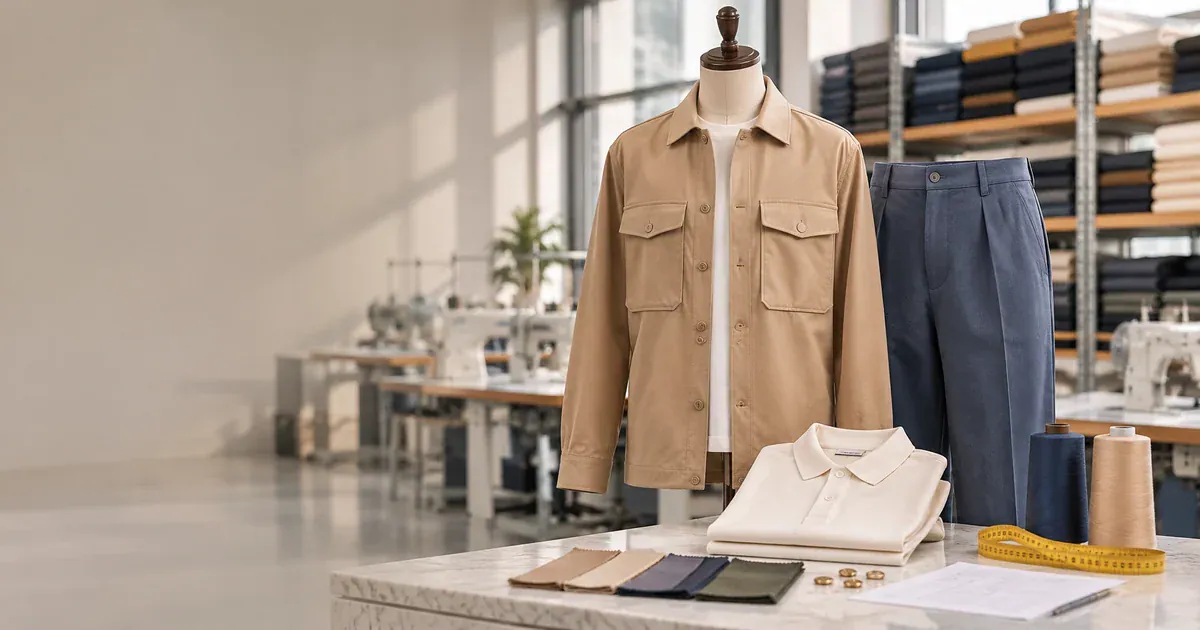
Custom workwear is getting more thoughtful in 2026. Companies still need shirts, pants, jackets and uniforms that suit the job. More buyers now also want clothing their staff are happy to wear beyond one shift.
For apparel brands and uniform suppliers this is a chance to build coordinated workwear collections, instead of plain garments with a logo added at the end.
The direction shows up in recent industry coverage, such as this 2026 workwear trend analysis on the crossover between uniforms and everyday clothing. It is a style direction, though. It is never a reason to ignore durability, fit or the real demands of the job.
What is modern custom workwear?
Modern workwear mixes clothing that suits the job with a consistent brand look and more everyday styling. A collection might include relaxed work shirts, straight utility pants, overshirts, jackets or embroidered polos. Each piece suits the work setting, and together they share a clear look.
Style and protection are separate requirements. A fashion inspired work jacket is not automatically protective equipment.
1. Why is workwear styling changing?
Traditional uniforms often put sameness ahead of fit and comfort. Today's collections borrow familiar casual shapes instead: roomier shirts, practical overshirts, straight pants and jackets that layer well.
That lets a company look consistent without forcing everyone into one stiff silhouette. Different teams need very different things:
- A hospitality group may want neat neutral shirts and aprons
- A creative agency may want embroidered overshirts and matching pants
- A warehouse team may need tough uniforms with useful pockets
These are different briefs. Treat them that way. The same casual and utility crossover shows up in streetwear too, as our top streetwear trends article explains.
2. Why start with the work setting?
A good manufacturing conversation starts with the job, not a garment photo. Two employers can both ask for work shirts and need very different fabric and construction.
- Retail teams value a neat look, comfort and easy washing
- Restaurant staff need freedom to move and fabric that survives frequent washing
- Office and showroom staff may prefer smart casual layers
- Warehouse teams need practical pockets and hard wearing fabric
- Outdoor teams may need weather features that are specified and tested on their own
List the tasks staff do and find the points of wear. Bending stresses trouser seams. Reaching changes how a shirt should fit at the shoulder. Frequent washing can affect color and size. These details turn an idea into a real spec.
3. Which products should you start with?
You do not need every category at once. A small coordinated range is easier to manage.
Work shirts and polos
Good starting points for customer facing teams. Decide on a tailored, regular or relaxed shape. Check collar shape, sleeve opening, buttons, logo position and how the shirt looks after washing. See our work shirts.
Utility and cargo pants
Pants need more than the right waist size. Pocket position, rise, seat room, knee movement and hem shape all affect daily use. Have the wearer test where things sit in the pockets while bending and sitting. See our cargo workwear.
Overshirts and work jackets
Overshirts give a casual layering option. Jackets need decisions about lining, closures, pocket strength and season. You can keep a modern shape while adjusting length and room for work. See our work jackets.
Browse the full workwear and uniforms range before you narrow down.
4. Which fabrics suit workwear?
Looks are only part of the choice. Ask how the garments will be cleaned, how much they must move and where they will rub.
- Twill from 180 to 280 GSM is the standard for work pants and jackets
- Pique from 180 to 250 GSM suits polo uniforms
- Cotton and polyester blends shrink and wrinkle less, which suits shirts that see daily use
Heavier is not always more comfortable. A lighter fabric may move better but need stronger pockets or seams. Judge samples after washing. Check the surface, color, size and how the garment hangs.
5. How do you get fit right across a whole team?
Uniform orders usually cover a wider size range than a fashion collection. One sample size cannot represent every body.
Decide whether you need separate fits, adjustable parts or several trouser lengths. Test the sample while the wearer reaches, bends, sits and walks. A shirt that looks good standing may pull across the back during work.
Use an agreed measurement chart and a clearly named base sample. Our tech pack guide explains how to set specs, and our size grading guide covers sizing across a range.
6. How should branding work on uniforms?
Logo size and position affect both look and comfort. A small chest embroidery suits a structured overshirt. A big transfer can feel wrong on a light shirt that moves a lot.
Choose the decoration after the fabric is set. Ask for artwork sizes, thread or ink colors, placement measurements and a decorated sample. Check that the logo reads clearly on every garment color. Branding can be consistent without being the same size on every item.
Reflective print can be added for staff who work near traffic or outdoors, but see the next section before you call it protective. Our services page lists all decoration options.
7. Why keep uniforms separate from protective clothing?
This matters a lot for buyers in the United States. Everyday branded clothing is not personal protective equipment.
A garment with ordinary reflective trim should not be described as meeting a visibility standard without the right design, testing and proof. The OSHA guidance on protective equipment explains that employers must assess workplace hazards and provide proper protection where required. Rules differ by country.
Never assume a safety rating from looks, fabric weight or a supplier's general experience. If protection is needed, confirm the standards, testing, documents and a qualified supply route before you order.
8. How do you plan for reorders?
Uniform programs need replacements as teams grow and staff change. Continuity matters.
Agree how fabric references, color standards, trims, artwork and size charts will be stored for future orders. Choose colors and fabrics with ongoing supply in mind. Ask what happens if a fabric or trim becomes unavailable. Any substitute should be approved, never swapped in quietly.
9. What should you check when sampling?
Check that the garments work as a collection. Compare colors under the same light, especially when several fabrics are used. Inspect pockets, sleeve movement, waistband comfort, closures and embroidery position.
If garments will be washed industrially, agree the wash test and pass rules in advance. Keep feedback specific. Instead of "make the pants more comfortable", say whether the seat, thigh, rise or waistband needs work. Our garment quality control checklist covers the full process.
10. MOQ, timing and cost
Uniforms can include several garments, colors and logo positions. Each variation affects sourcing and setup. Ask whether the minimum applies per garment, design and color, rather than per outfit.
With us most categories start from 50 pieces per color and design. Our capacity is more than 20,000 garments a month, and bulk usually takes 15 to 30 working days after sample approval. A full quote depends on fabric, design, quantities, branding, labels, packing and delivery terms. When you compare suppliers, make sure both quotes cover the same specs.
Custom workwear at Alif Thread Industries
We are a custom clothing manufacturer in Sialkot, Pakistan. Our catalog includes work shirts, work pants, work jackets, cargo workwear and many uniform types for hospitality, healthcare, security and corporate teams.
For a useful first talk, send a product reference, the work setting, fabric preferences, quantities by color and design, logo artwork, sizes and the delivery country. Include any required performance or compliance needs. Contact us here.